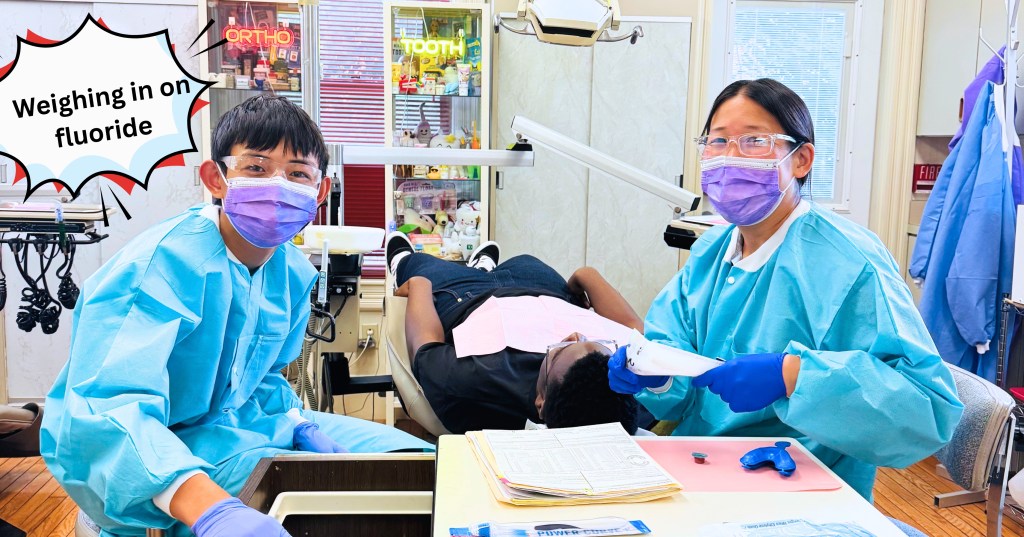
During February Break, I finally returned to the dental practice where I usually assist during routine checkups. One of my usual tasks is preparing the fluoride trays. It’s the green gel that helps strengthen enamel and prevent cavities. But I started noticing something that surprised me. A number of patients declined the fluoride treatment. I had always assumed fluoride was an obvious benefit, so their hesitation made me wonder why they didn’t want fluoride. I started asking myself the question, “if fluoride is designed to protect our teeth, why would people avoid it?” The question pushed me to dig deeper into what fluoride really is, so I could understand why people don’t want it, and help patients make informed decisions based on facts.
I started my research by reading The Fluoride Debate: The Pros and Cons of Fluoridation – PMC on the National Institute of Health database to start our quest for the truth about fluoride. The article made it clear that fluoride isn’t a simple good or bad issue. There are real benefits and concerns. To make sense of the controversy, I decided to break the topic into the major advantages of fluoride, the drawbacks, and what the scientific evidence suggests overall
Let’s start with the pros of fluoride. To start, the article states that “the only known association with low fluoride intake is the risk of dental caries.” This means having a lack of fluoride leads to more cavities, so therefore, having more fluoride prevents cavities. Next, the article informs us that fluoride works mainly topically, meaning you apply it directly to the teeth. When fluoride is applied topically, it strengthens enamel (the outer surface of your teeth), and reverses early decay. Because of all of these benefits of fluoride, the article calls water fluoridation “one of the best public health achievements in the twentieth century,” since it reduces cavities across entire populations, especially in communities that can’t go to the dentist.
Something important to point out is that fluoride is naturally occurring. Sometimes, patients say they don’t want fluoride because “it’s an artificial chemical.” After reading this article, I learned that fluoride is “one of the most abundant elements found in nature,” and water is the major dietary source. This completely counters the misconception that fluoride is an artificial chemical, and changed my knowledge, because I thought fluoride was an artificial chemical.
However, there are concerns about fluoride. For one, the main scientifically supported risk is dental fluorosis. Dental fluorosis is a cosmetic condition caused by overexposure to fluoride during tooth development, which is before the age of 8. It typically appears as faint, white, streaks, or spots on the enamel of teeth. The article also acknowledges the ongoing debate about how much fluoride should be added to water supplies, because too little gives no benefit, but too much increases fluorosis risk.
Surprisingly though the main concern about fluoride is public controversy and mistrust in fluoride. The article notes that fluoride has become controversial in some communities, often due to misinformation or fear of chemicals.
So you might be wondering where I stand on the fluoride debate after hearing the pros and cons of fluoride. After researching, it’s clear to me that fluoride deserves more support. It has years of evidence behind it, it strengthens enamel, and helps prevent cavities in communities that don’t always have access to regular dental care. Standing up for fluoride means standing up for science, for public health, and for the idea that everyone deserves to have a healthy smile. We need to stop letting misinformation or fear shape people’s decisions about fluoride. So I strongly encourage you to stand up for fluoride, tell others about its benefits, and spread this blog post so we can clear the confusion about fluoride. Instead of letting misinformation shape decisions, we can rely on evidence that shows fluoride is a safe and effective way to protect teeth and improve community health.
For those of you who disagree with me, that’s totally okay. What matters most is learning to stand up for informed decisions. Don’t just base your “no” to the dentist for fluoride based on popular opinion, or the fact that fluoride is a “chemical.” Base it on real evidence, real research, and a real understanding of what fluoride actually does.


Leave a Reply