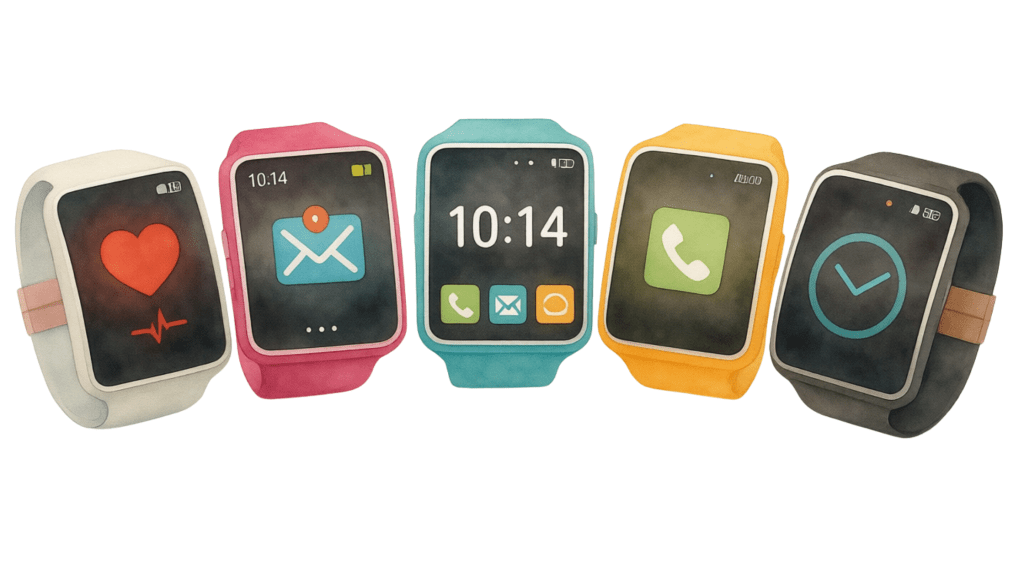
Did you know that almost one in three Americans uses a wearable device, like a fitness band or smartwatch to track their activity and health? Personally, I only have experience using a smart watch to track my running and play golf, but that statistic made me wonder why these devices have become so popular. In addition, if so many people use a wearable device, then it would probably be good to know if these devices are helping us, or stressing us out. In health class, I learned how social media can create unhealthy standards of beauty, which made me wonder whether wearables might be creating their own kinds of pressure. In this blog post, I will go over the pros and cons of wearable devices, and explain my personal opinion.
First, let’s go over the pros of these wearable devices to figure out why wearables are popular. According to this article, wearables provide real time data, support remote monitoring, and help with early detection of clinical events. Wearable devices also show progress in predictive algorithms, therapeutic adherence, and chronic disease management. The National Center for Health Research also says how fitness trackers can increase daily physical activity by 27 percent, and increase physical activity and help motivate lifestyle changes. I agree with this statement because for me, knowing my time and pace while running pushes me to run more, because I want to improve my speed.
However, according to this article, although wearables are popular, their potential harms are under examined, and safety concerns remain largely unstudied. The article states that there are anxiety and psychological downsides to wearable devices. It warns that evidence of benefits does not mean an absence of harm, and calls for research into adverse outcomes. The National Center for Health Research also notes that although technology for wearable devices has dramatically improved, smartwatch pedometers are not always accurate, even though they encourage healthy habits. The American Journal of Medicine found little evidence that wearables improve chronic disease outcomes, for example there has been no consistent improvements in blood pressure, cholesterol or weight.
After looking at the pros and cons, my opinion is that wearable devices are helpful tools, but only if we stay in control of them instead of letting them control us. I think wearable devices are beneficial because they motivate us, teach us about our habits, and help us be healthier. But I also think it is easy to get caught up in the data and numbers and forget that our bodies are not machines. For example, a bad sleep score doesn’t mean your day is ruined. Overall, I think that wearable devices should support our well being, and not become another source of stress in our lives.
I have compiled some simple ways to use wearable devices without letting them take over your life. It’s important to treat the numbers as clues and not commands. A device will give you estimates, and not truths. If you feel good, but the device says a lot of negative stuff about your performance, trust your gut. Also make sure to look at trends, not single days. Finally, take notice when the data is stressing you out. If the data is doing so, then take a break from wearing the device.
In conclusion, wearable devices are not good or bad, they are tools. They can help us move more, sleep better and understand our bodies. However they can also make us anxious, and disconnected to how we actually feel. If we use wearables thoughtfully, they can make our lives better and healthier, without taking over our lives.


Leave a Reply